MentalInsight
A guided wellbeing assessment with saved progress, results to review, and a browser-local trial alongside the organisational sign-in route.
Verified production footprint
Aggregate snapshot verified 29 August 2026
- client deployments
- 2
- participant records
- 2,834
- questionnaire records
- 5,304
Operational volume only. These figures do not claim a causal clinical or efficiency outcome.
Context
Employee wellbeing questionnaires ask people to disclose personal information in a setting connected to work. The product therefore has to explain the process, reduce avoidable pressure, and keep assessment results from being presented as a diagnosis.
Problem
A long form with unclear progress can discourage completion. Participants also need to understand what will happen to their answers, whether they can return later, and how to interpret a generated result without confusing screening with professional care.
My role
I designed the assessment sequence, privacy-conscious participant experience, result presentation, bilingual direction, and full-stack implementation around the selected standardised questionnaires.
What was built
- Participant registration and saved progress.
- Clear separation between starting, answering, reviewing, and reading results.
- Standardised questionnaires presented one manageable step at a time.
- Thai-first screens with English support where required.
- Results that can be reviewed or downloaded for the participant’s own use.
Design story
Explain the choice before asking for answers
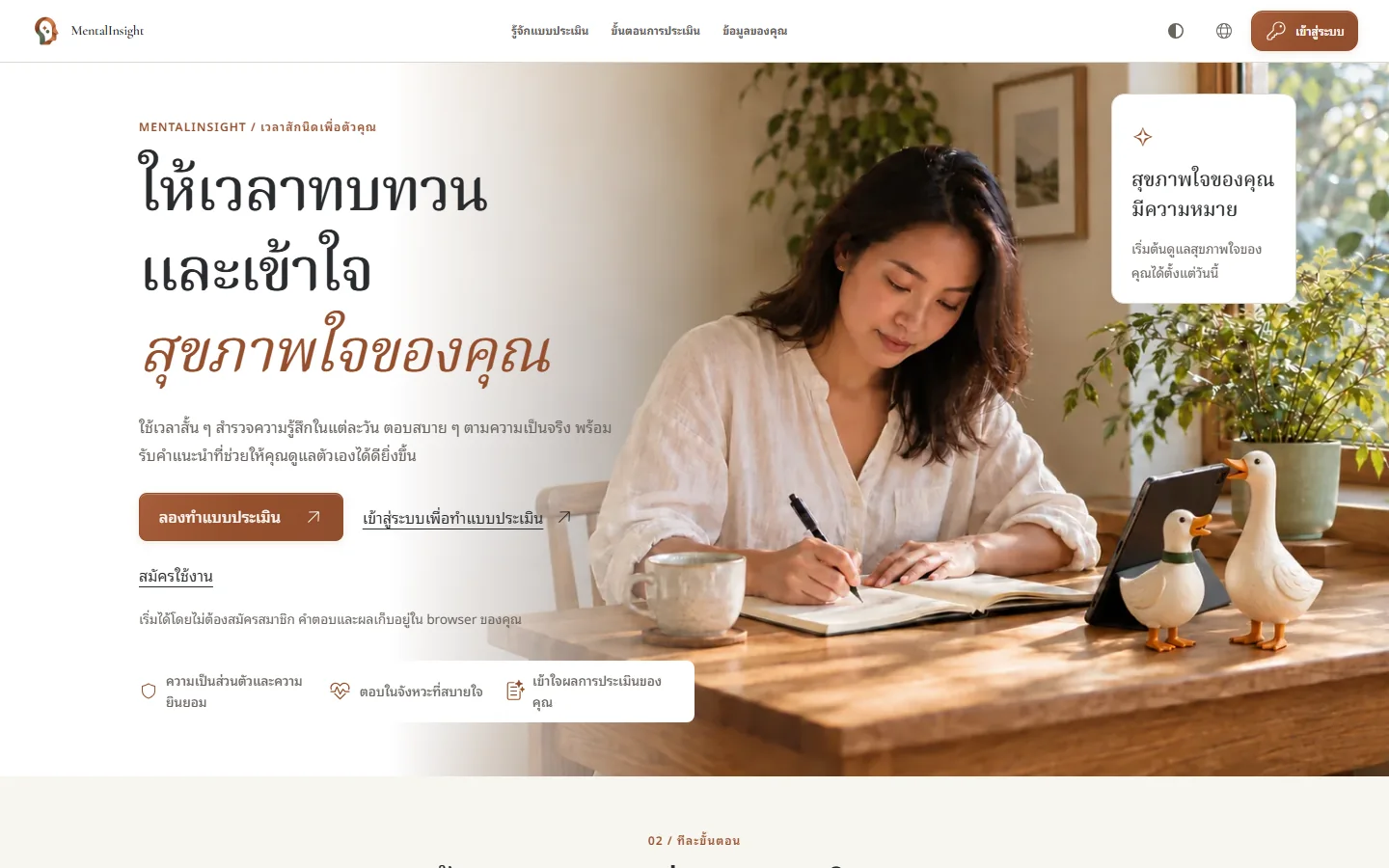
The public page offers a local trial and a separate sign-in route. Its trial description says answers and results stay in that browser; that promise applies to the trial, not to every organisational workflow. Making the distinction visible lets people understand which experience they are entering.
Use a calm, readable sequence
Warm photography and generous spacing introduce a process that moves from information and consent through questions to results and next steps. Saved progress supports a return visit. Screening results need context and room for careful reading, not a dramatic score reveal.
Key workflow
- Explain the assessment and its limits before registration.
- Let the participant move through the questions with visible progress.
- Save an unfinished assessment for a later return.
- Present the result with appropriate context and follow-up guidance.
- Allow the participant to retain or download the result where the programme permits it.
Constraints
The interface must not make sensitive questions feel casual, coercive, or diagnostic. Access, retention, and programme policy must be clear, and participant answers and results remain private.
Verified operational footprint
The snapshot verified on 29 August 2026 covers two client deployments, with 2,834 participant records and 5,304 questionnaire records. These figures describe operational scope; they are neither a count of unique people across all systems nor evidence of mental-health outcomes.
Implementation recorded in the original case study
Front end: Blazor WebAssembly. Back end: ASP.NET Core (.NET 8), PostgreSQL and Entity Framework Core. Infrastructure protection: Cloudflare.
These implementation details are retained from the original case study; this content refresh does not establish the application's current package versions.
Image and source notes
Public introduction, October 2026. The local trial and organisational sign-in are presented as separate entry points.
Content refreshed on 7 November 2026 from the published Quack & Honk MentalInsight page.